

Understanding sinusitis
Sinusitis is an inflammation of the sinus lining. When swelling blocks a sinus opening, normal mucus drainage may not occur, which can lead to recurrent infections and chronic sinusitis.
Sinusitis can be acute, lasting less than four weeks, or chronic, lasting longer than 12 weeks. An evaluation is needed to understand the cause and determine a treatment plan.
 Your symptoms.
Your starting point.
Symptoms worth discussing
Common symptoms of acute and chronic sinusitis include:
- Facial pain, pressure, or congestion
- Tenderness and swelling around the eyes, cheeks, nose, or forehead
- Difficulty breathing through the nose
- Reduced sense of smell or taste
- Sinus headaches
- Yellow or green nasal mucus
- Tooth pain, fatigue, or sore throat from nasal discharge
From medication to a procedure
Sinusitis can be treated without surgery using medications such as antibiotics or nasal steroid sprays. When medical therapy does not adequately improve symptoms, a procedure to improve sinus drainage may be considered.
Traditional sinus surgery enlarges the sinus opening by removing bone and tissue. Balloon sinuplasty uses a flexible balloon catheter to widen the passageway while maintaining the integrity of the sinus lining.
How balloon sinus dilation works
A balloon catheter is inserted into the inflamed sinus. The balloon is inflated to expand the sinus opening. Saline is then used to flush out pus and mucus. Finally, the system is removed, leaving the sinus passageway open.
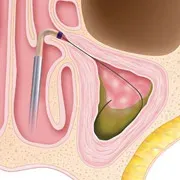
Guide
A balloon catheter enters the inflamed sinus.
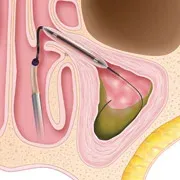
Expand
The balloon expands the sinus opening.
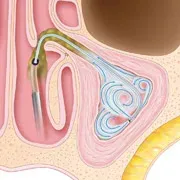
Rinse
Saline flushes out mucus.
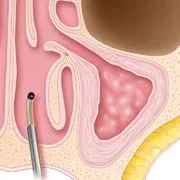
Remove
The catheter is removed.
In-office treatment and recovery
For eligible patients, balloon sinuplasty can be performed in a physician’s office using local anesthesia. Recovery time varies, but most patients undergoing the in-office procedure can return to normal activities and work within two days.
An office setting may offer greater convenience and, for some eligible patients, lower out-of-pocket costs than a higher-cost setting. Coverage and costs should be discussed with the office and insurer.

Start with an individual evaluation
A consultation is the first step in determining whether balloon sinuplasty is appropriate. Discuss your main concerns, goals, treatment options, risks, benefits, and expected recovery.
Chronic sinusitis can occur alongside a deviated septum, enlarged turbinates, or Eustachian tube dysfunction. A complete evaluation helps identify which concerns need to be addressed.
Start a conversation